
The trinity.

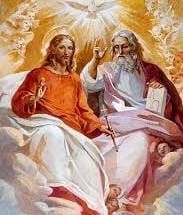
The concept of the Trinity has been a cornerstone of Christian theology since its inception. It is the belief that God is one being in three persons: the Father, the Son, and the Holy Spirit. While this doctrine has been accepted by many as an essential tenet of the faith, it has also been the subject of much debate and interpretation. In this article, we will explore the history, significance, and controversy surrounding the Trinity.
The History of the Trinity
The roots of the Trinity can be traced back to the early days of Christianity. The earliest evidence of the concept can be found in the writings of church fathers such as Tertullian, who was the first to use the term "Trinity" in the late 2nd century. However, it was not until the 4th century that the doctrine was formally defined and codified by the Council of Nicaea in 325 AD.
At the time, the Trinity was a response to various heresies that were circulating, particularly Arianism, which denied the divinity of Jesus Christ. The Council affirmed the belief that the Father, Son, and Holy Spirit are co-equal and co-eternal, and each person is fully God. This became the orthodox understanding of the Trinity and has been held by the majority of Christians ever since.
The Significance of the Trinity
The Trinity is a complex and mysterious doctrine, and many struggle to fully comprehend its significance. One of the primary reasons for its importance is that it is a fundamental aspect of the Christian understanding of God. It affirms that God is not a solitary being, but rather a relational God who exists in community within himself.
Furthermore, the Trinity is also significant in understanding the nature of Jesus Christ. As the Son, Jesus is both fully God and fully human, united in one person. This concept of the incarnation is central to Christian belief and is directly tied to the doctrine of the Trinity.
The Trinity also plays a crucial role in the Christian understanding of salvation. It is believed that through Jesus' death and resurrection, the Trinity was at work to bring about the redemption of humanity. The Father, Son, and Holy Spirit all played unique roles in this process, highlighting their distinct yet unified nature.
Controversies Surrounding the Trinity
Despite its widespread acceptance, the Trinity has been the subject of much debate and controversy throughout history. One of the primary concerns has been the difficulty in fully understanding and articulating this doctrine. As the belief is that God is a mystery beyond human understanding, it is not surprising that many find it challenging to grasp.
One of the most significant controversies surrounding the Trinity was the Arianism debate in the 4th century. While the Council of Nicaea affirmed the orthodox understanding of the Trinity, there were still many who rejected it, leading to further divisions within the church.
Today, the Trinity continues to be a point of contention among Christians. Some reject the doctrine entirely, while others have different interpretations, such as Modalism, which suggests that the Father, Son, and Holy Spirit are different modes or roles of one God. These disagreements have led to schisms and divisions within the faith, emphasizing the complexity and challenge of comprehending the Trinity fully.
Conclusion
In conclusion, the Trinity is a central doctrine of Christianity that affirms the belief in one God in three persons. It has been a crucial aspect of Christian theology since the early days of the faith, and its significance cannot be understated. However, it has also been the subject of much debate and controversy, highlighting the difficulty in fully understanding this mysterious yet fundamental aspect of the Christian faith.
As we continue to grapple with the concept of the Trinity, one thing remains certain: this doctrine serves as a reminder of the vastness and complexity of God and his love for humanity. It is a doctrine that inspires awe and wonder, and while we may never fully comprehend it, we can take comfort in the fact that it points us towards the depth of God's character and the unity within the Godhead.